🎉 Up to 70% Off Selected ItemsShop Sale
FSC Describing Flowers
FSC Describing Flowers
Need to use a flora to identify flowers, but a bit rusty on the terms?
The FSC Describing Flowers guide describes and illustrates the main characters used in identification.
These include:
Overview of flowers: whorl, calyx, sepals, petals, stamens, carpels.
Flower symmetry: actinomorphic and zygomorphic.
Perianth: anther, filament; shape and arrangement.
Carpel: stigma, style, ovary, ovule; inferior and superior ovaries
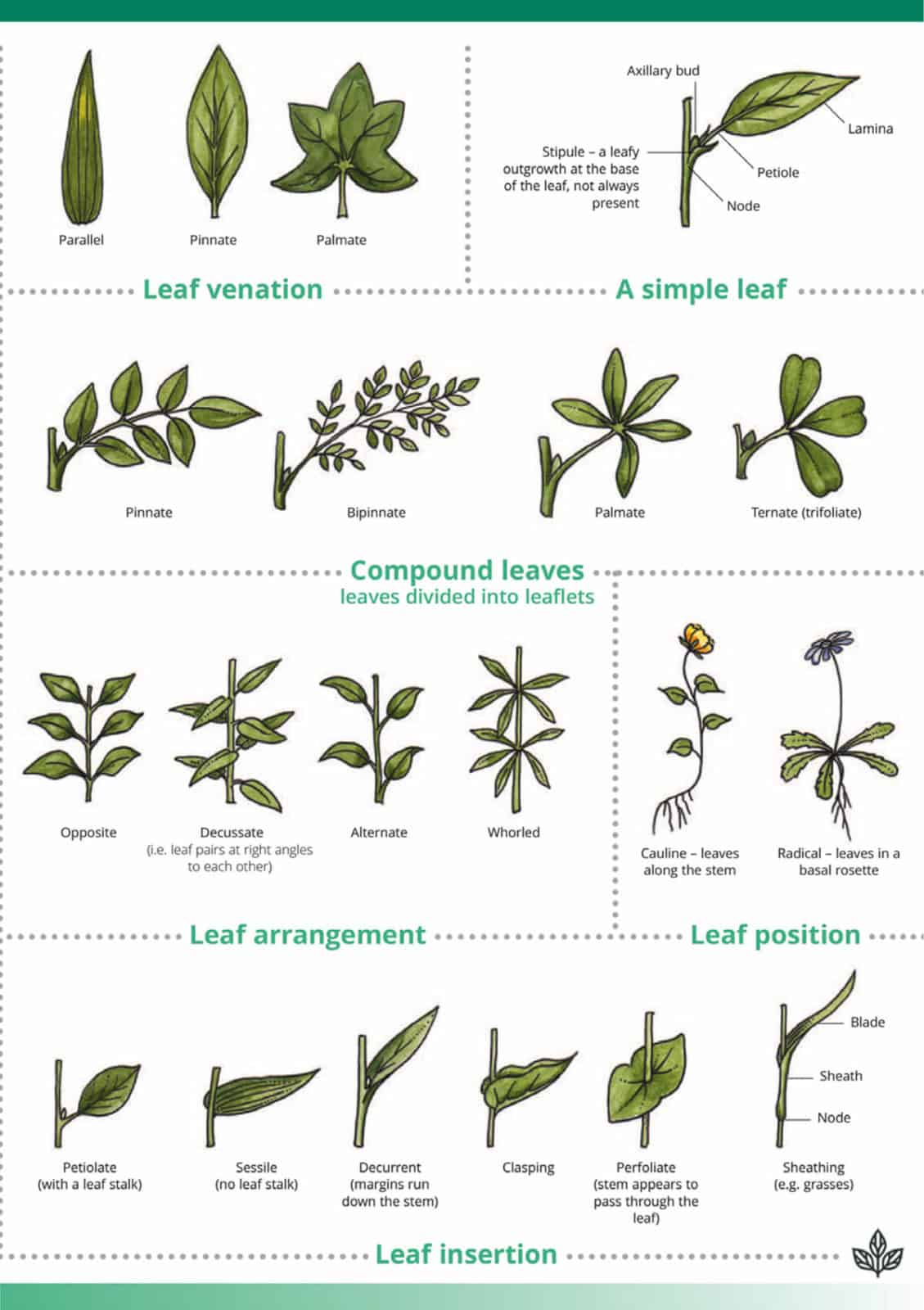
Leaf: venation, arrangement, position, margins, bases, shape, stipules; simple and compound leaves.
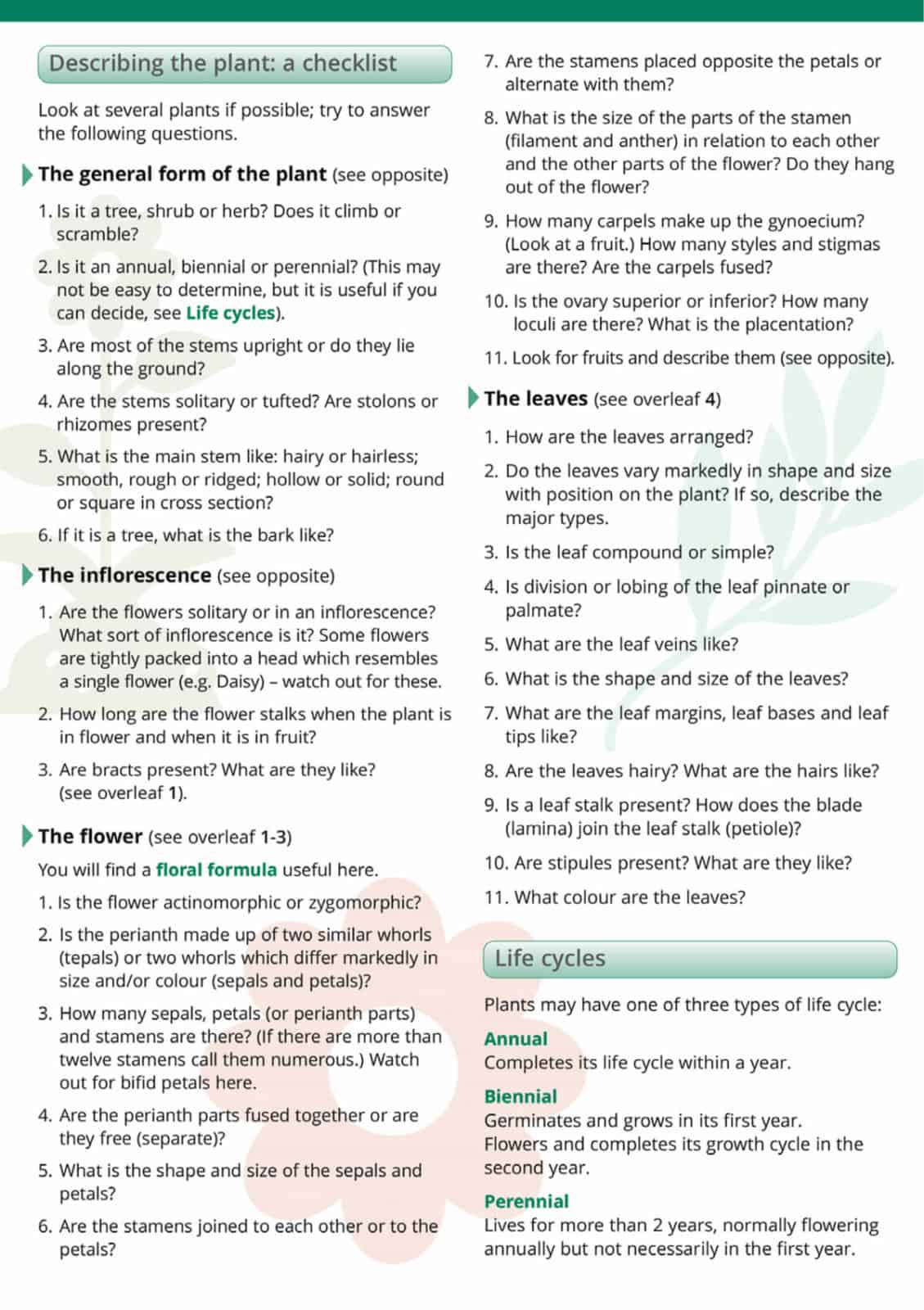
Text on the reverse side includes a checklist of the main characters you can record in the field.
We've also included a guide to writing a floral formula, and to describing fruits (berry, drupe, achene, nut, capsule, etc), plant form (herb, shrub, tree), organs of vegetative reproduction (stolon, rhizome, etc) and inflorescence (spike, panicle, rhizome, etc).
This fold-out chart aims to describe the basic structure of the plant and the terms most commonly used in identification. It will be particularly useful when used alongside plant identification keys.
$2.82
Original: $8.07
-65%FSC Describing Flowers—
$8.07
$2.82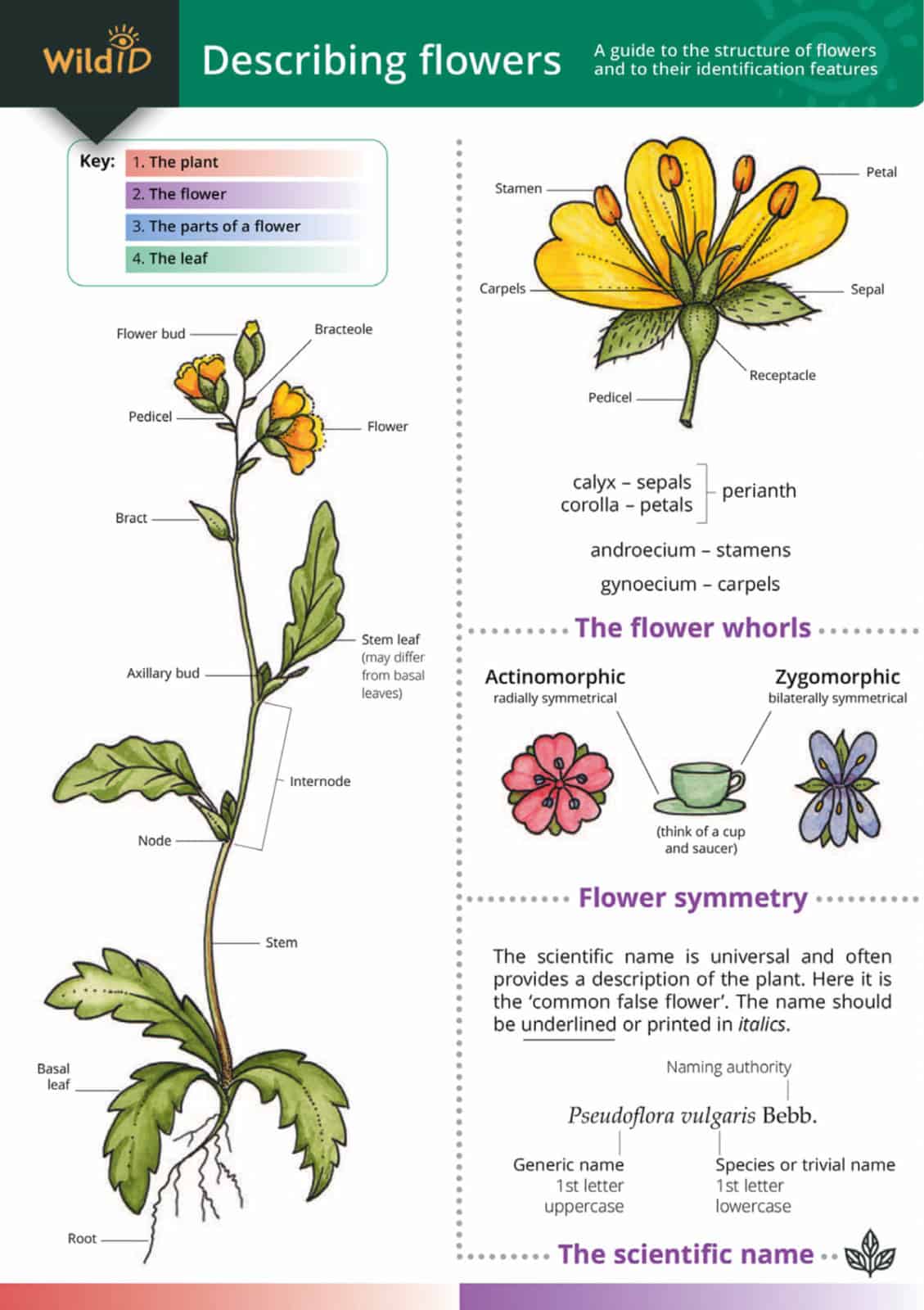
Description
FSC Describing Flowers
Need to use a flora to identify flowers, but a bit rusty on the terms?
The FSC Describing Flowers guide describes and illustrates the main characters used in identification.
These include:
Overview of flowers: whorl, calyx, sepals, petals, stamens, carpels.
Flower symmetry: actinomorphic and zygomorphic.
Perianth: anther, filament; shape and arrangement.
Carpel: stigma, style, ovary, ovule; inferior and superior ovaries
Leaf: venation, arrangement, position, margins, bases, shape, stipules; simple and compound leaves.
Text on the reverse side includes a checklist of the main characters you can record in the field.
We've also included a guide to writing a floral formula, and to describing fruits (berry, drupe, achene, nut, capsule, etc), plant form (herb, shrub, tree), organs of vegetative reproduction (stolon, rhizome, etc) and inflorescence (spike, panicle, rhizome, etc).
This fold-out chart aims to describe the basic structure of the plant and the terms most commonly used in identification. It will be particularly useful when used alongside plant identification keys.